
Why We Chose Waxed Canvas: The Durable, Water-Resistant Materials Behind Your Goldie Bag
When we designed the Goldie picnic bag, every material choice was intentional. We wanted something beautiful enough to elevate everyday moments, durable enough to be used often, and be carried for years.
One of the most common questions we receive is about the waxed canvas exterior — especially when it comes to water. If you’ve noticed lighter spots or marks after water touches your bag, you’re not alone.
Let’s explain why that happens, and why it’s actually part of the patina process; and ultimately the unique charm of your Goldie Bag.
Here’s the breakdown and how to care for your waxed canvas Goldie Picnic Bag.
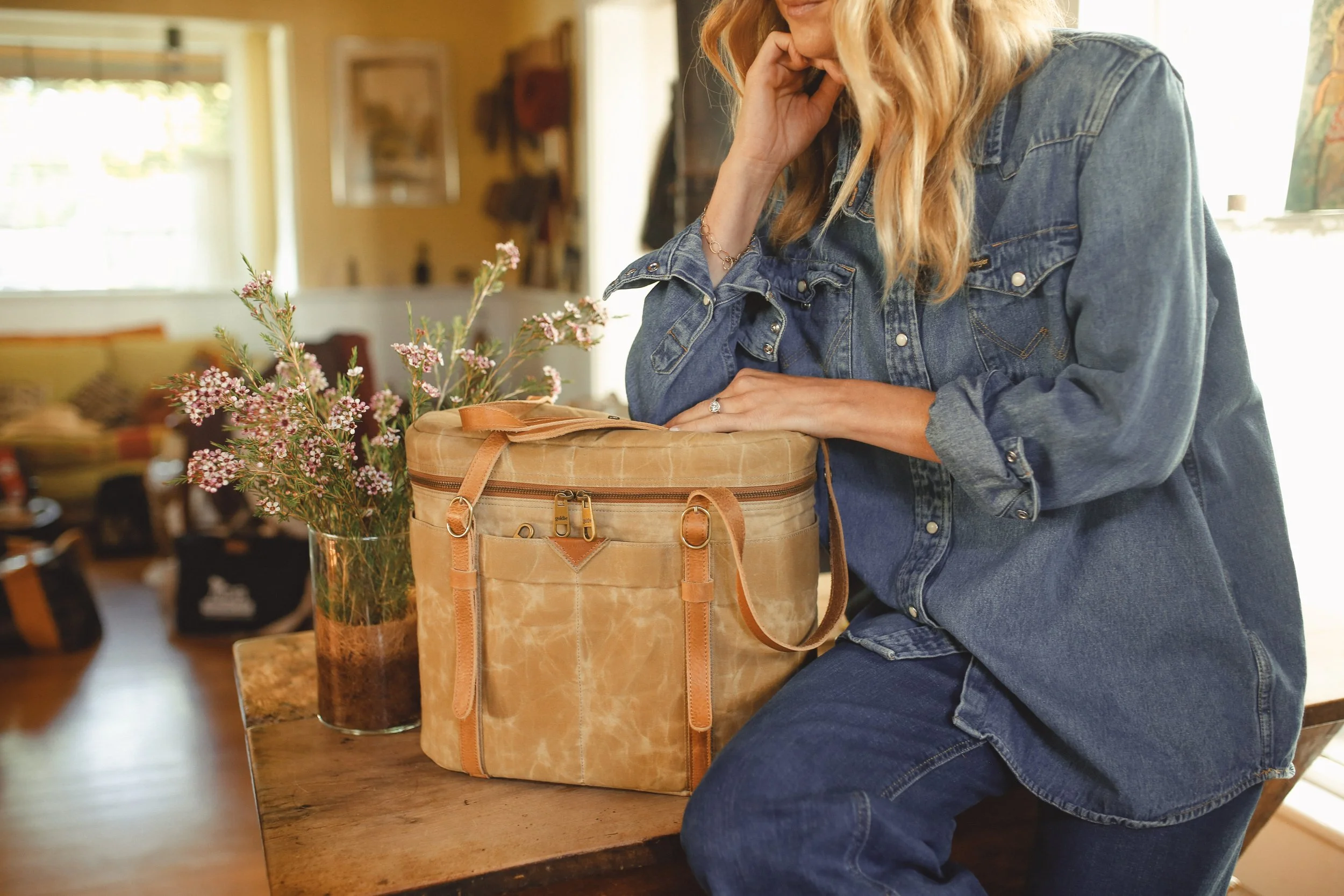
Why we chose waxed canvas
Waxed canvas is a heritage material with a long history — originally used for sails, workwear, and outdoor gear. We chose it because it’s:
Naturally water-resistant
Durable and long-lasting
Repairable and re-waxable over time
Designed to age beautifully with use
Unlike synthetic waterproof fabrics, waxed canvas is a living material. It responds to touch, temperature, and use — and it tells a story as it goes.
Does waxed canvas repel water?
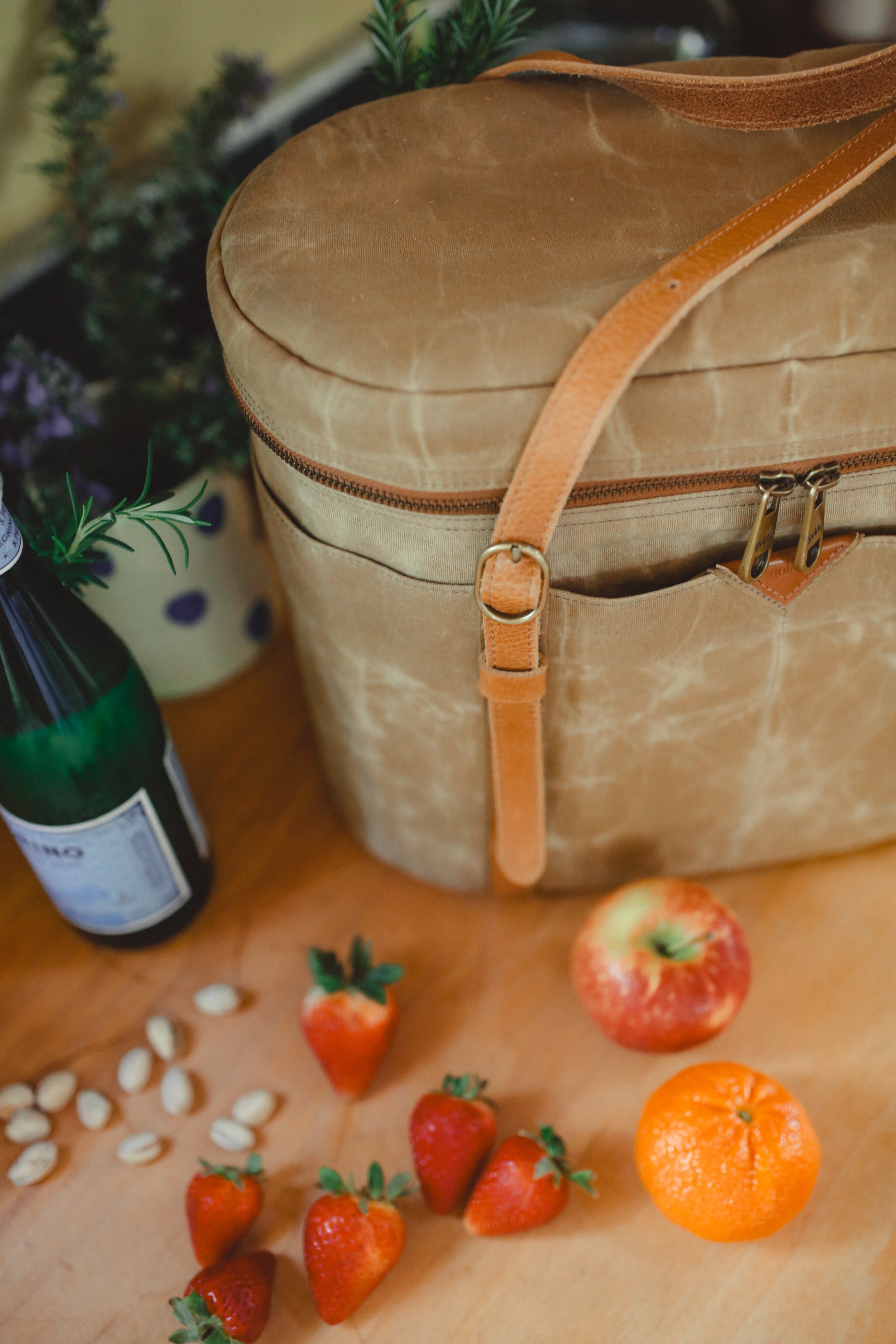
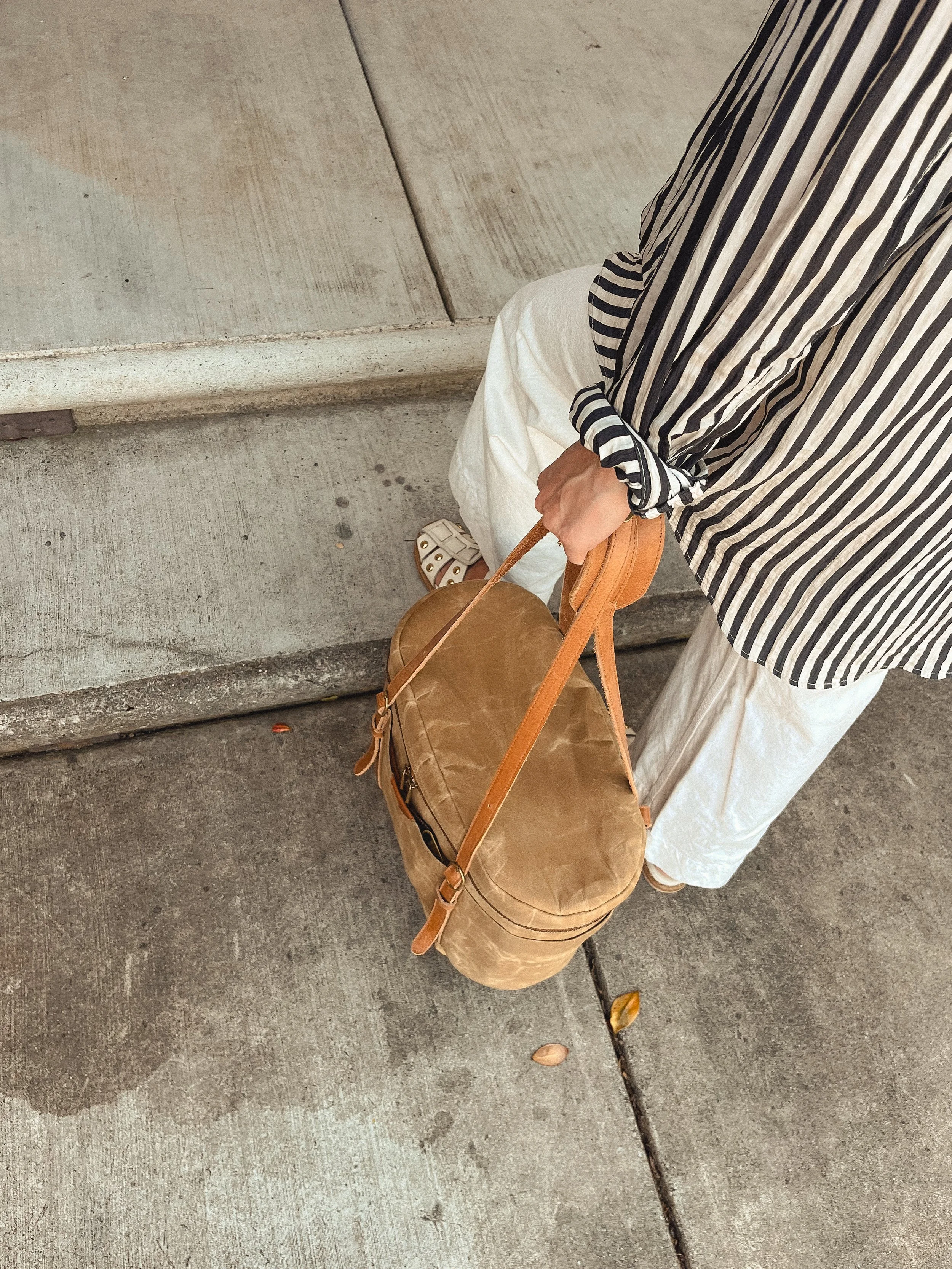
Yes — waxed canvas repels water, but not in the way many people expect.
When water hits the surface, it doesn’t soak through the fabric. Instead, it sits on top of the wax layer. However, because wax is temperature- and pressure-sensitive, water droplets can temporarily change the appearance of the surface, leaving lighter marks or spots.
These marks are not stains. They’re simply areas where the wax has shifted.
Why do water marks apear?
A few things can cause this:
Cold water hitting warm wax
Pressure from droplets sitting in one place
Natural variations in how wax distributes across the fabric
This is completely normal and expected with traditional waxed canvas.
Many people refer to this evolving look as patina — the visual character that develops as the bag is used and loved.

An Easy At-Home Fix (No Re-Waxing Required)
In many cases, the solution is incredibly simple. Because wax softens with warmth, you can:
-Gently warm spotted, speckled, or creased area with a blow dryer for a few seconds
-Leave your bag out in the warm sun until the wax warms and softens
-Use your fingers or a soft cloth to rub the wax back into the surrounding fabric. As the wax warms, it evens out and the canvas returns to a more uniform look.
You can also expect many marks to soften and fade naturally over time with regular use.
When to Rewax
If you’d like to refresh the overall finish or restore a more consistent appearance, re-waxing is a great option. It revives water resistance and brings the canvas back to a more even tone.We recommend Otter Wax, a trusted, all-natural option that works beautifully with traditional waxed canvas:
Otter Wax Regular Bar
https://www.otterwax.com/products/otter-wax-regular-bar
A Bag That Gets Better With Time
Waxed canvas isn’t meant to stay pristine. It’s meant to be lived in — to pick up subtle marks, soft creases, and signs of the moments it’s been part of.
If you ever have questions about care, use, or upkeep, we’re always here to help.
